
You walk through Trinity Bellwoods or past a pull-up bar in a park, and you think: could I just do this instead of a gym? If you're searching for calisthenics in Toronto, here's the honest version of what bodyweight strength can and can't do.
What calisthenics actually is
Calisthenics is strength training where your own body is the weight. Push-ups, pull-ups, squats, dips, planks, hanging leg raises. No machine, no barbell, often no equipment at all.
It's brilliant for three reasons. It's cheap, you can do it in a park or a living room, and it forces you to control your own body through space, which carries over to nearly everything else you do.
It also gets sold as magic. It isn't. It's strength training with a different toolbox, and the rules of strength training still apply: progressive difficulty, enough effort, enough consistency.
The only rule that matters: progress it
Bodyweight work gets easier as you get stronger, because the load never changes. So you have to make the exercise harder, not just do more reps forever. Here's how that looks.
- Push: wall or incline push-up, then floor push-up, then slow tempo push-up (3 seconds down), then feet-elevated or archer variations.
- Pull: inverted row (under a bar or rings), then negatives (jump up, lower slowly), then a full pull-up, then weighted or slower pull-ups.
- Squat: box squat, bodyweight squat, split squat, rear-foot-elevated split squat, then single-leg work.
- Core: dead bug, plank, hollow hold, then hanging knee raise.
The sweet spot is a movement where you can do about 5 to 12 clean reps and the last two feel properly hard. Easy 30 reps is cardio. Seven shaky ugly ones is too far up the ladder. Go back a step.
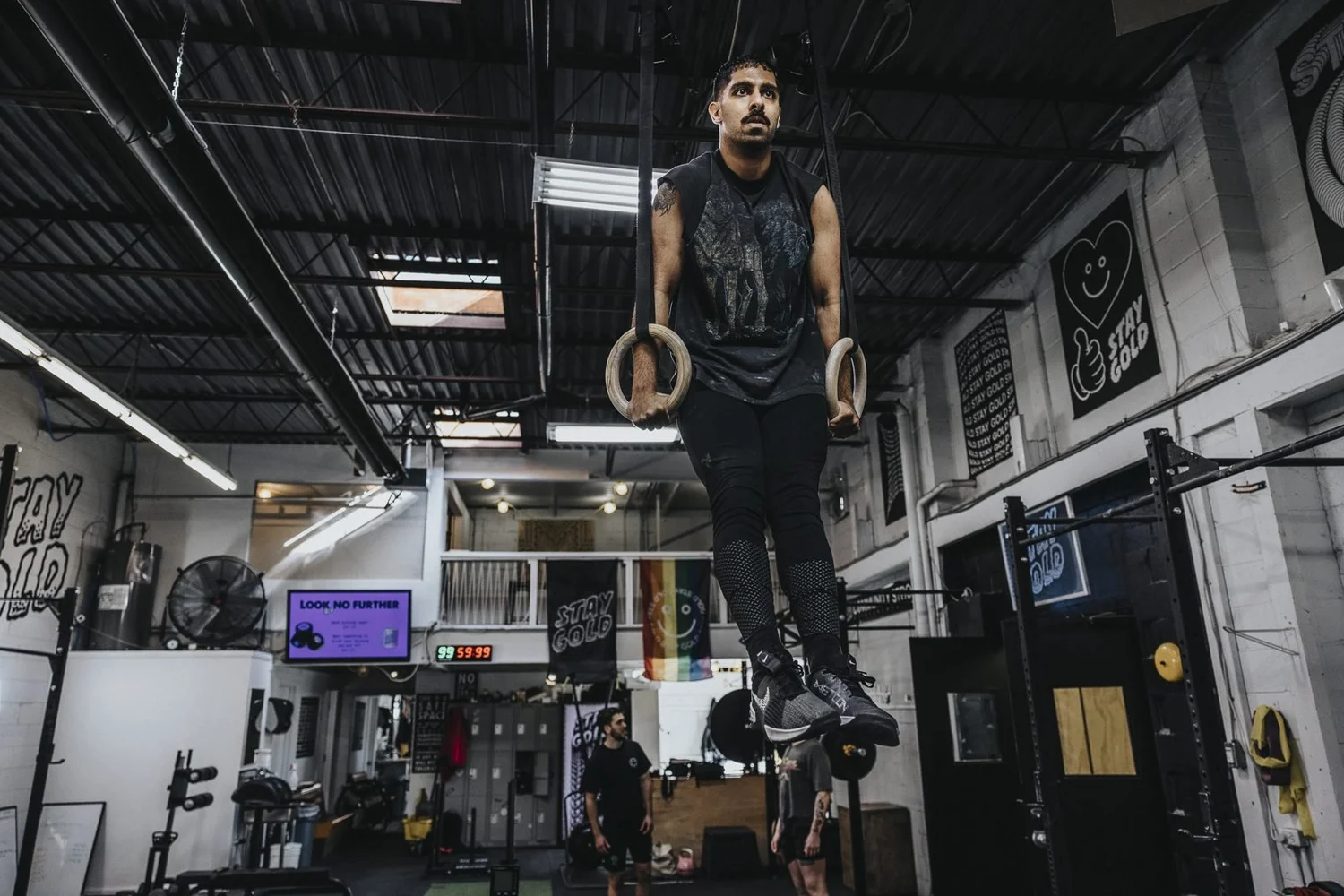
Where it shines, and where it runs out
Calisthenics is excellent for upper-body pushing and pulling, trunk strength, body control and joint-friendly volume. If you're a beginner, you can get seriously strong on bodyweight alone for a long time.
The limits are real, though:
- Legs. Your legs are strong, so bodyweight squats stop challenging them quickly, and single-leg progressions are hard to scale in small steps. A loaded squat, deadlift or lunge fixes that fast.
- Pulling variety. You can only hang and row so many ways. Dumbbells, cables and bars give you finer control.
- Small jumps. Moving from a push-up to an archer push-up is a big leap. Adding 2.5 kg to a barbell is not.
My view: calisthenics is a great foundation and a great tool, and it's even better paired with weights. Do both. Many of our favourite strong humans do.
How much do you need?
The Canadian 24-Hour Movement Guidelines for adults 18 to 64 recommend muscle-strengthening activities that work the major muscle groups at least twice a week, alongside at least 150 minutes of moderate to vigorous aerobic activity. You can check the details on the CSEP guidelines page.
Two bodyweight sessions a week that cover push, pull, squat or lunge, and core will cover the strength side. Add a walk, a run or a bike ride and you've hit the basics.
Three mistakes that stall bodyweight progress
Half reps. Stopping short at the bottom of a push-up or squat feels strong and builds very little. Use the full range you own.
Swinging. Kipping and bouncing turn a pull-up into a gymnastics trick. Slow it down and let the muscles do the work.
Skipping the legs. Plenty of people can do ten push-ups and can't hold a single-leg squat. Balance the program: if you push, pull and squat each week, you'll avoid lopsided strength.
A simple 30-minute bodyweight session
Do three rounds with about 60 to 90 seconds rest between rounds:
- Incline or floor push-up, 8 to 12 reps
- Split squat, 8 to 10 per side
- Inverted row, 8 to 12 reps
- Dead bug, 8 per side
- Finish with a 5-minute walk
If a round feels too easy, slow the tempo or move to a harder variation. If it's too hard, move to an easier one. That's the whole system.
Doing calisthenics in Toronto with a coach
Learning to progress an exercise is the part most people skip, and it's where a coach earns their keep. Our small group personal training classes cap at 8 people, so a coach can see your push-up and tell you what to change. Gold Standard, our Strength & Conditioning class, is built to scale up and down for each person in the room.
If you'd rather train on your own, open gym is there at both locations. And if you're brand new, start at our beginners page. We're a beginners-welcome, body-positive space, so nobody's going to judge your first wobbly pull-up negative.
See where we are: Brock in Parkdale and Dundas near Baby Point.
Quick answers
Can you build muscle with calisthenics?
Yes. If you progress the exercises so the last few reps are hard, bodyweight training builds muscle and strength, especially in beginners. Over time, adding weights makes progress easier to control.
Is calisthenics good for beginners?
Yes. Start with easier variations like incline push-ups and box squats, and move up when you can do 10 to 12 clean reps.
How often should I do calisthenics?
Two to three sessions a week is plenty. Canadian guidelines suggest strength work for the major muscle groups at least twice a week.
Where can I do calisthenics in Toronto?
Parks, your home, or a gym. A coached class helps with form and progressions if you're not sure where to start.
Get strong with what you've got
Coached strength for every level, with a plan that scales to you.