
Toronto has fitness classes on every corner, from spin to boxing to barre to bootcamp. Picking one is easy. Picking one you'll still be attending in June is the real question.
We run group classes for a living, so here's our honest checklist for what makes fitness classes Toronto people actually stick with. Use it on us, too.
Why group classes work (and when they don't)
Group exercise has real pull. A Science Focus roundup of the research notes that exercising with others can boost effort and keep people coming back. One study found that women who worked out with a teammate on stationary bikes pushed longer and harder. And a stronger sense of "groupness" was linked to enjoying a class more.
The same piece is honest about the catch: group exercise doesn't suit everyone, and some people feel intimidated, especially beginners dropped into advanced classes. The benefits show up most when people train with others at a similar level who share their goals.
So the question isn't "should I do a class?" It's "what kind of class am I walking into?"
What makes fitness classes Toronto people stick with
We've boiled it down to seven things. None of them are about how fancy the lighting is.
1. Class size
This is the biggest one. In a class of 30, you're a face in the crowd. The coach can't see your squat, and nobody notices if you quietly skip the hard part.
In a class of 8, the coach knows your name by the second week. They see when your knees cave in. They notice when you're having a rough day. That's why our small group training classes are capped at 8 people, and it's the reason people ask us about class size more than anything else.
2. Real coaching, not just cheerleading
Music and energy are fun. But a good class also teaches. You should leave knowing something you didn't know when you walked in: how to brace, how to hinge, how to breathe. Look for a coach who demonstrates, corrects and explains the "why."
3. Everyone can scale it
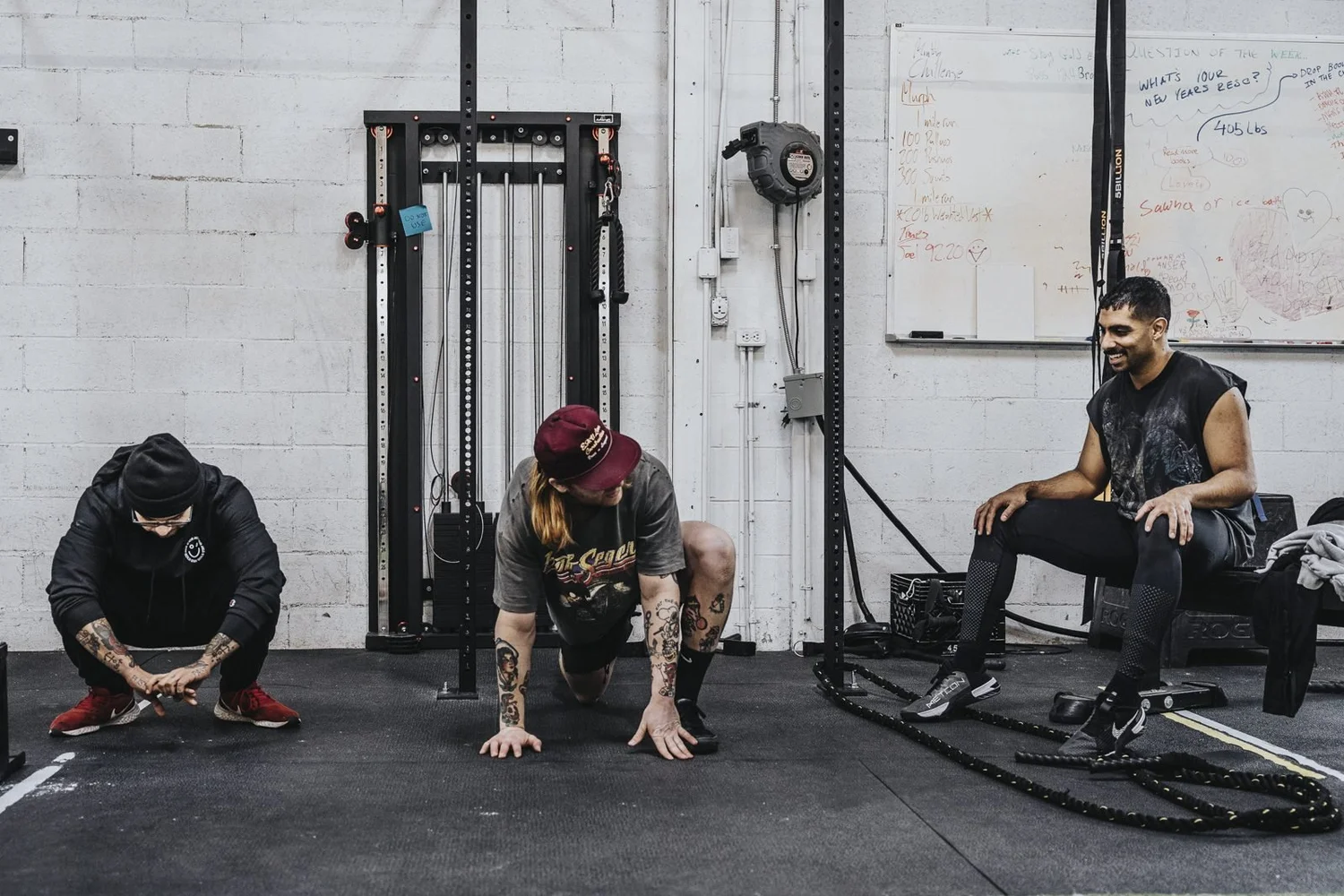
In a good class, the same workout works for a first-timer and an old hand. The beginner uses lighter weight or a simpler version. The veteran loads up. Nobody's embarrassed either way.
Ask a class this: "What if I can't do that movement?" If the answer is "you'll figure it out," keep shopping. If it's "here are three options," good sign.
4. A plan, not a random workout
A pile of exercises that leaves you exhausted isn't a programme. A good class has a purpose. Strength this week, conditioning that supports it, mobility to keep you moving well. At Stay Gold, for example, Gold Standard is our Strength & Conditioning class, Golden Hour is Pilates for full-body strength, Liquid Gold is mobility, and our HYROX / DEKA Training sessions are for people who want to race. Different jobs for different days. You can see them all on our classes page.
5. A room that feels like yours
Do people say hello? Does the coach learn names? Would you feel okay being the newest and slowest person there? This part is hard to measure but easy to feel. We're body positive, inclusive and beginner friendly, and that means nobody gets a side-eye for lifting light or asking questions.
It also helps to try the class at the time you'd actually go. Not every class is for every person, and that's fine. Maybe you want the energy of a bigger group, or maybe you need the quiet focus of a small one. Pay attention to how you feel afterwards: tired and happy is a good sign, tired and annoyed is information too. A packed 6 p.m. class feels different than a quiet 10 a.m. one.
6. The warm-up and cool-down
A class that jumps straight into max effort and ends the second the timer stops is a class that gets people injured. Good ones ease you in, build up, and let you come down. If the first five minutes feel like a real warm-up, that's a good sign the coach thinks about your body and not just your sweat.
7. Consistency beats intensity
The best class in the city is the one you attend twice a week for a year. Choose something with a schedule you can actually keep, in a neighbourhood you actually travel through. If you live near Parkdale or Queen West, our Brock location is close. In the Junction, Baby Point or Bloor West Village, check out Dundas.
Ready to be a regular? Come see both spaces on our Brock page or Dundas page.
Red flags to watch for
- The coach never leaves the front of the room or the mic.
- Every exercise is "all out" with no alternatives.
- Nobody asks about injuries or experience before you start.
- The class is so packed you can't see the demo.
Any one of these isn't fatal. Several together are a good reason to try somewhere else.
Quick answers
How many people should be in a group fitness class?
Smaller is better if you want coaching. Under about ten people means the coach can see your technique and adjust things for you.
Are group classes good for beginners?
Yes, if the class can scale. Look for coaches who offer lighter or simpler options and who welcome newcomers.
How often should I go to fitness classes?
Two or three times a week is a solid start for most people. Pick a pace you can keep for months, not weeks.
What's the difference between a class and personal training?
A class gives you coaching in a group with a shared programme. Personal training is one on one and built around you alone.
Try a coached class
Tour either gym and see what a small group of 8 feels like.