
Walk through any gym and watch the rowers. Most of them are doing the same thing: yanking the handle with their arms, shooting the seat back, and wondering why their lower back is cooked after four minutes. Good rowing machine technique is simpler and a lot less painful.
Rowing machine technique: the sequence that matters
A rowing stroke is a leg drive, not an arm pull. Concept2, the company that makes the machines most gyms use, breaks the stroke into four parts: catch, drive, finish, and recovery. Here is the short version, using their guidance.
- Catch: Arms straight, head neutral, lean forward from the hips, shins roughly vertical.
- Drive: Legs first, then swing your back through vertical, then pull the handle with your arms. Hands travel in a straight line and shoulders stay low and relaxed.
- Finish: Lean back slightly, supported by your core, with the handle held lightly below your ribs and your wrists flat.
- Recovery: Reverse it. Arms straighten first, then your body leans forward from the hips, then your knees bend and the seat slides up.
That's it. Legs, body, arms on the way back. Arms, body, legs on the way up. If you remember nothing else, remember: push first, pull last.
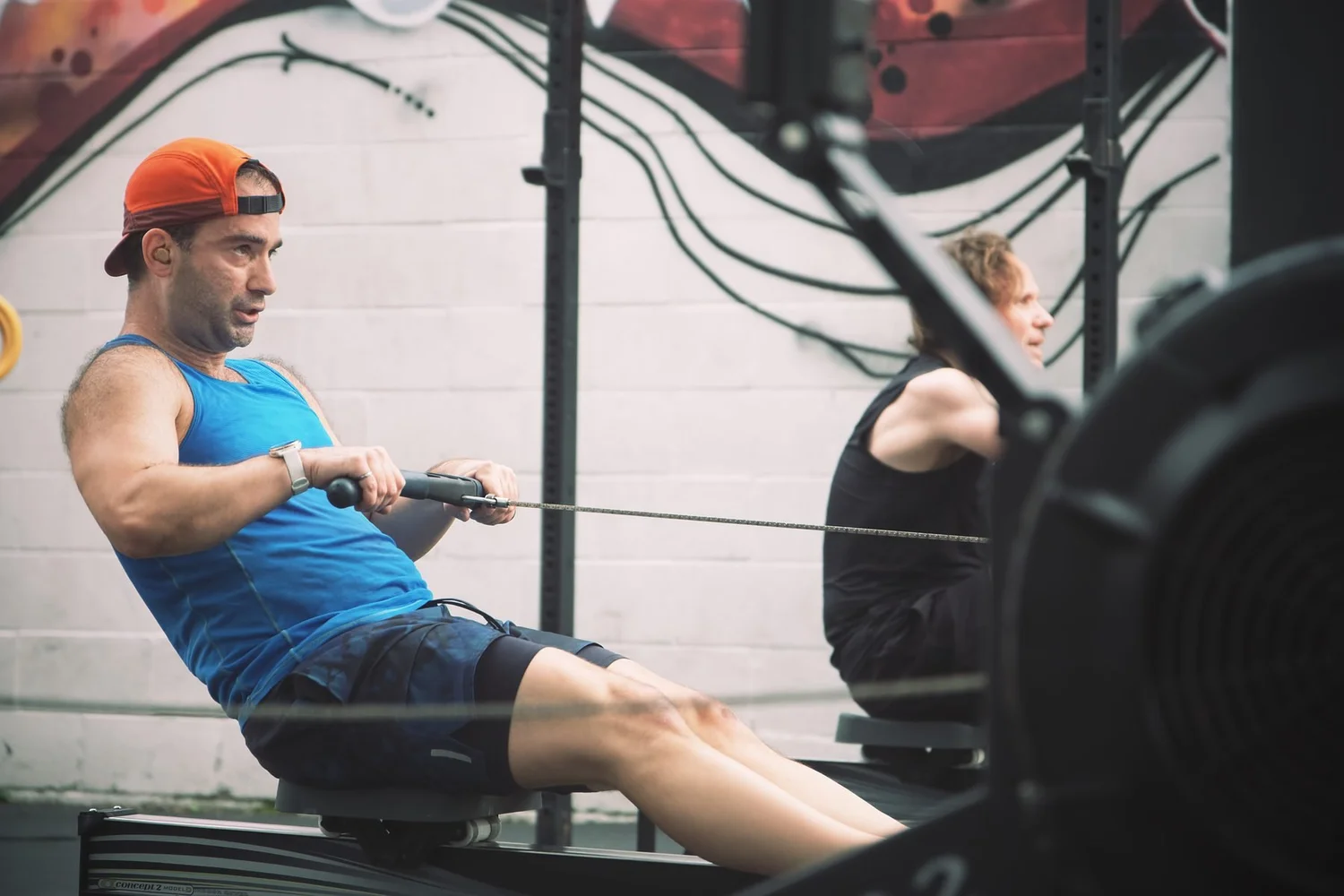
Five common rowing mistakes
1. Pulling with your arms first. The most common fault. Your arms are small and tired quickly. Your legs are your big engine, so use them first.
2. Shooting the slide. This is when your hips shoot backwards before your shoulders move, so your legs fire and your body stays at the catch. You lose most of the power. Keep your chest and hips moving together for the first half of the drive.
3. Hunching at the finish. Collapsing forward or leaning way back puts stress on your lower back. Finish tall with your core engaged.
4. Reaching too far at the catch. Over-reaching with a rounded back means you start the stroke from a weak position. Reach from the hips, not the shoulders.
5. Death-gripping the handle. A white-knuckle grip burns out your forearms. Hold lightly. The handle is a hook, not a rope you're strangling.
What the damper really does
The damper is that lever on the side of the flywheel, numbered 1 to 10. It isn't a resistance level like weights on a bar. It controls how much air gets pulled in, which changes how heavy each stroke feels. Think of it like the gears on a bike.
Higher doesn't mean better. A very high damper turns every stroke into a grinder and makes it harder to keep clean technique. HYROX presets the damper to 6 for the 1,000 metre row, and athletes are allowed to adjust it before they start. Try a few settings and find the one where your stroke feels smooth and strong without being a slog.
A five-minute technique warm-up
Do these before any rowing piece. They teach the sequence.
- Arms only, 10 strokes. Sit upright and pull with just your arms.
- Arms and body, 10 strokes. Add the back swing.
- Half slide, 10 strokes. Add the legs, but only half the slide.
- Full stroke, 10 strokes. Everything together, nice and smooth.
Then row 2 minutes easy, and notice whether your hands lead or your legs do.
Pacing a row
Rowing isn't a sprint when it's a 1,000 metre or a longer piece. Go out controlled, settle into a steady rhythm in the low to mid 20s for strokes per minute, and build in the last quarter. Many people burn their legs in the first 200 metres and spend the rest of the row hanging on.
Video: Concept2 technique
If you'd rather see it than read it, this Concept2 technique video walks through the stroke.
How we coach it
Rowing is one of the eight HYROX stations, and every HYROX race has you row 1,000 metres after you've run, skied, pushed and pulled a sled, and hopped through 80 metres of burpees. Technique is what keeps your legs for the run that follows. As an official HYROX Training Club and DEKA affiliate, it's something we coach in HYROX / DEKA Training. Read more on our HYROX and DEKA page.
New to rowing? Our beginners page is the place to start, and our small group classes cap at 8 so the coach can actually see your stroke. You can find the full class list on the classes page.
For the full Concept2 breakdown, see their rowing technique page.
Quick answers
What is the correct rowing machine technique?
Catch, drive, finish, recovery. On the drive, push with your legs first, swing your back, then pull with your arms. On the recovery, reverse the order.
Should I use my arms or legs when rowing?
Legs first, then back, then arms. Your legs are the strongest part of the stroke, so they should do most of the work.
What damper setting should I use?
There's no single right answer. HYROX presets the damper to 6 for its 1,000 metre row, but you can adjust. Pick the setting where your stroke stays smooth.
Why does my lower back hurt when I row?
Usually it's shooting the slide, hunching, or leaning too far back at the finish. Slow down, keep your core braced, and have a coach check your form. If pain persists, talk to your doctor.
Row better, row longer
Coached conditioning where technique comes first.