
Strength training in Toronto is easier to start than most people think. You don't need a perfect programme or a fancy gym. You need a few basic movements, a plan, and someone to show you how.
Strength training for beginners: why start at all
Lifting weights isn't only for people who want to look a certain way. Getting stronger helps you carry groceries up the stairs, run for the streetcar, play with kids, and stay independent for decades. Public health guidance backs this up. The Canadian 24-hour movement guidelines for adults 18 to 64 recommend muscle-strengthening activities using major muscle groups at least twice a week, alongside at least 150 minutes of moderate to vigorous aerobic activity.
Twice a week. That's the entire entry requirement. You can do that.
The six movements that matter
Don't memorize fifty exercises. Learn these six patterns and you've covered your whole body.
- Squat. Sit down and stand up. Start with a goblet squat, holding a dumbbell at your chest.
- Hinge. Push your hips back and stand up tall. Romanian deadlifts and kettlebell deadlifts are great teachers.
- Push. Push-ups (any incline), dumbbell presses.
- Pull. Rows with dumbbells, cables or a barbell. Most of us need more pulling than pushing.
- Carry. Pick up something heavy and walk. Farmer's carries build grip, core and confidence.
- Core and stability. Planks, dead bugs, split squats.
A simple first month
Train two or three days a week, with a rest day in between. Each session:
- Warm up for 5 to 8 minutes: easy cardio, then a lighter set of your first lift.
- Do 1 squat or hinge, 1 push, 1 pull, and 1 core move. Three sets of 8 to 10 reps each.
- Finish with a short carry or walk.
Pick a weight where the last two reps feel challenging, but your form stays clean. If you could do five more, go heavier. If your form falls apart, go lighter. When all your sets feel steady for a couple of sessions, add a little weight or an extra rep.
That's the whole idea behind progress. Do a bit more over time, and recover in between.
Where to start strength training in Toronto
You've got options, and none of them is wrong.
A coached class
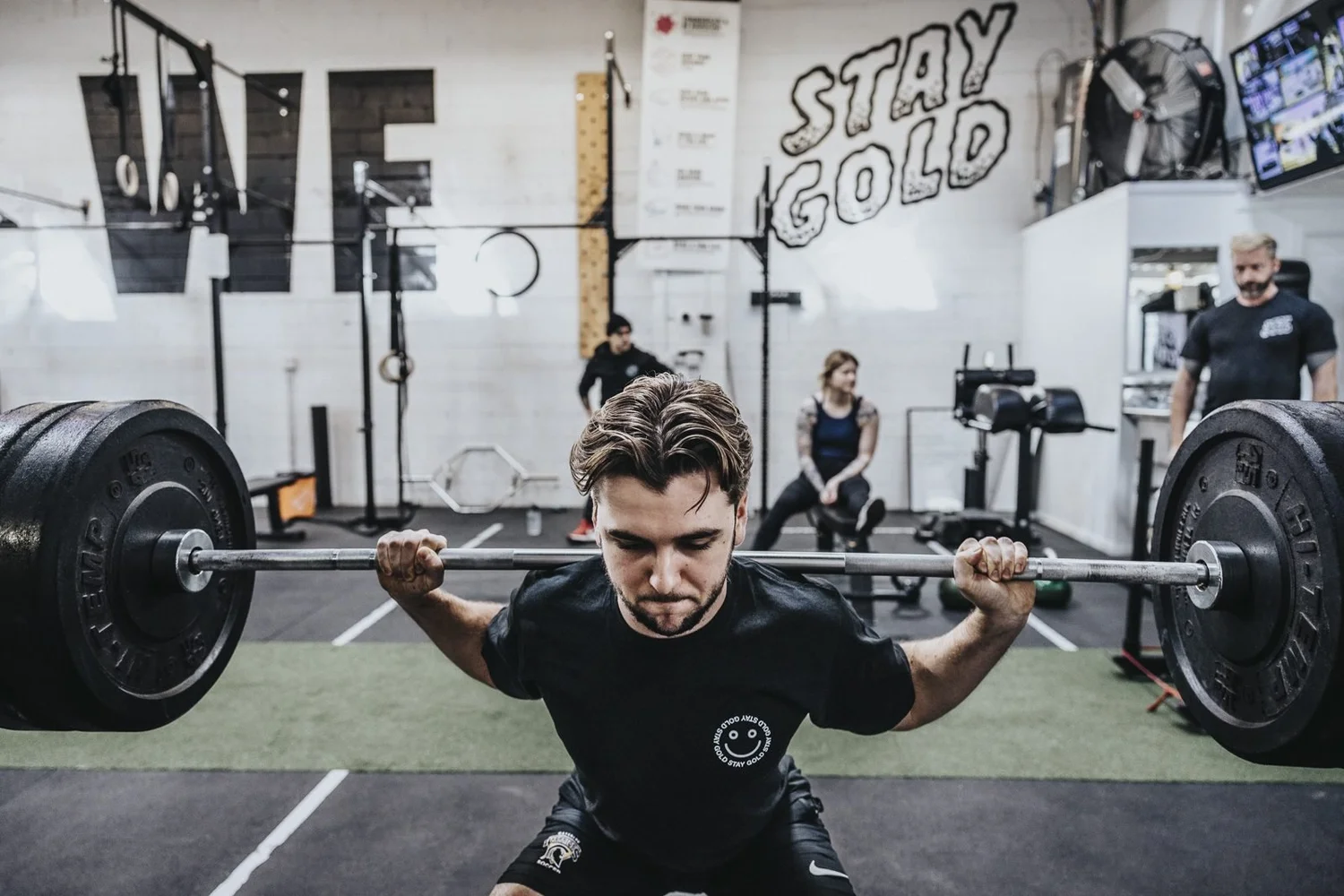
Our favourite for beginners, obviously, but for good reason. A class gives you structure, a coach to correct your form, and company. Our small group personal training classes are capped at 8 people, so the coach can actually see you. Gold Standard is our strength and conditioning class, and it's a good place to learn the basics.
1:1 coaching
If you want to learn the lifts in private, or you have specific concerns, personal training lets you move at your own pace with full attention.
Open gym on your own
If you like to train solo, an open gym works well once you know the basics. Some people start with a few coached sessions, then train solo between them.
The big-box gym
Also fine. Just be honest about whether you'll know what to do when you get there.
What about cardio?
Keep doing it. Strength and aerobic work are partners, not rivals. A couple of brisk walks, a bike ride or an easy jog each week alongside your lifting rounds out the guidelines and helps you recover between sessions. If you're curious about race-style training later on, our HYROX and DEKA programming blends both.
How to know it's working
Forget the scale for a month. Track three things instead: the weight you lift on your main exercises, how many reps you do, and how the work feels. If you did 10 reps with 15 pounds last week and 10 with 20 this week, that's progress. If your squat looks smoother, that's progress. If the stairs feel easier, that's progress too.
What soreness is normal?
Some muscle soreness a day or two after a new workout is normal, especially in the first few weeks. It should feel like a dull, general ache, not a sharp or joint pain. Sharp pain, pain that gets worse as you move, or anything that lingers for days is a sign to back off and ask a coach, physio or doctor.
Common beginner worries
"I'll look silly." Everyone started somewhere. Good gyms are full of people who remember their first day.
"I'm not fit enough." That's like saying you're too dirty for the shower. Strength training scales to wherever you are.
"I don't want to get bulky." You won't, by accident. Building large amounts of muscle takes years of focused effort. Most people just get stronger and more capable.
"I have an injury or health condition." Talk to your doctor or physio first, then tell your coach. We'd rather adjust the plan than have you skip it.
Stay Gold is body positive, inclusive and beginner friendly. If you're not sure where you fit, visit our beginners page.
Quick answers
How often should a beginner strength train?
Two to three times a week is plenty. Canadian guidelines recommend muscle-strengthening activities at least twice a week for adults.
What are the best strength exercises for beginners?
Goblet squats, hip hinges, push-ups, rows, carries and core work like planks cover the major movement patterns.
Do I need a personal trainer to start?
No, but coaching helps with form and confidence. A coached class or a few 1:1 sessions can make your first months safer and more enjoyable.
How long until I see results?
Most beginners feel stronger within a few weeks, since early gains come from your nervous system learning the movements. Visible changes usually take longer.
Start strength training
Try a coached class and learn the basics with a coach beside you.